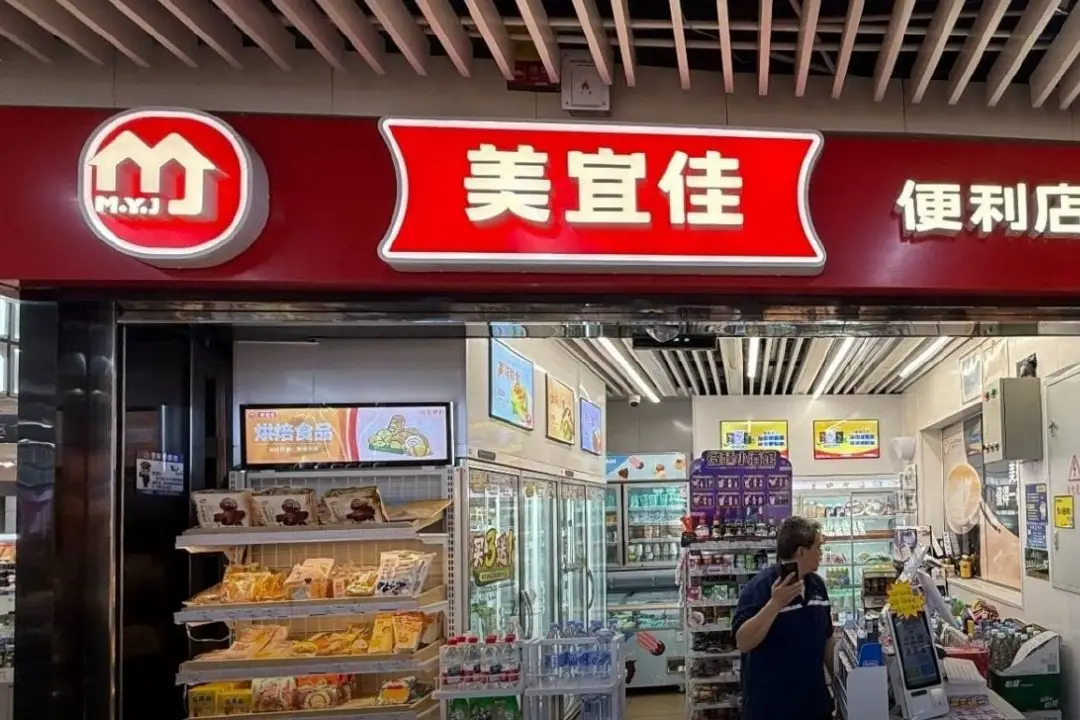
Meiyijia, China’s largest convenience store chain, has taken its first steps outside its home market. The company, which opened its 40,000th store in China in July 2025, entered Vietnam on 22 April 2026 under a new brand name: Ohmee.
The name is a signal. Shoppers in Hanoi will not see the Meiyijia sign over the door, and the company has no consumer recognition to trade on in Vietnam. What it is exporting is not a brand but an operating model.
A cautious start in Hanoi
The first three Ohmee stores opened in Hanoi and were run directly by the company before being offered to franchisees. Testing the format with company-operated stores gives Meiyijia time to adjust product ranges, pricing and store processes before handing them to local partners.
Expansion has been quick. By September 2026, Ohmee reported 35 outlets in Vietnam. That month it also opened two Ohmee Express stores inside Petrolimex fuel stations in Hanoi, a new format for the chain. Malaysia is also part of the company’s international plans.
A crowded market
Ohmee is entering a market where international chains have been building networks for years. Circle K, the largest foreign convenience chain in Vietnam, operates more than 520 outlets, followed by GS25 with over 400, according to figures reported by Tuoi Tre News in September 2026. Ministop, FamilyMart and 7-Eleven run smaller networks.
That context helps explain the Petrolimex partnership. Fuel stations offer steady traffic in locations where convenience competitors are thinner, and a partner with an existing network of sites can speed up expansion without competing for the same urban leases.
What Meiyijia brings, and what it lacks
Meiyijia built its network in China largely through franchising, supported by centralised supply and digital store management. The question is how much of that system can be transferred. Supplier relationships, logistics and consumer habits in Vietnam are different, and the efficiencies that support thin margins in China may take time to rebuild.
Without brand recognition, a newcomer has to win on location, price or product mix. The first year of openings suggests Ohmee is prioritising speed and partnerships over flagship locations.
What it means for brands
For consumer goods companies, a new convenience chain adds a potential channel in Vietnam, particularly for snacks, beverages and personal care. A chain that is still building its ranges may be more open to new suppliers than established competitors. At the same time, franchise-led formats tend to centralise listing decisions and focus on price and turnover. Brands considering the channel should understand how ranges are decided, what margins are expected, and whether the chain’s location strategy, such as fuel stations, reaches the consumers they want.
Sources
- China’s Meiyijia enters Vietnam under Ohmee brand — Inside Retail Asia, 5 May 2026
- China’s convenience store giant Meiyijia opens first Ohmee outlets in Vietnam — Tuoi Tre News, 4 May 2026
- Petrolimex, Ohmee Vietnam launch convenience store model at Hanoi’s petrol stations — VietnamPlus, September 2026
- China’s Ohmee convenience stores move into Vietnam’s Petrolimex gas stations: A win-win? — Tuoi Tre News, 8 September 2026