Industry leaders share insights on the evolving Thai luxury market, changing consumer expectations, and the strategic challenges facing international brands.
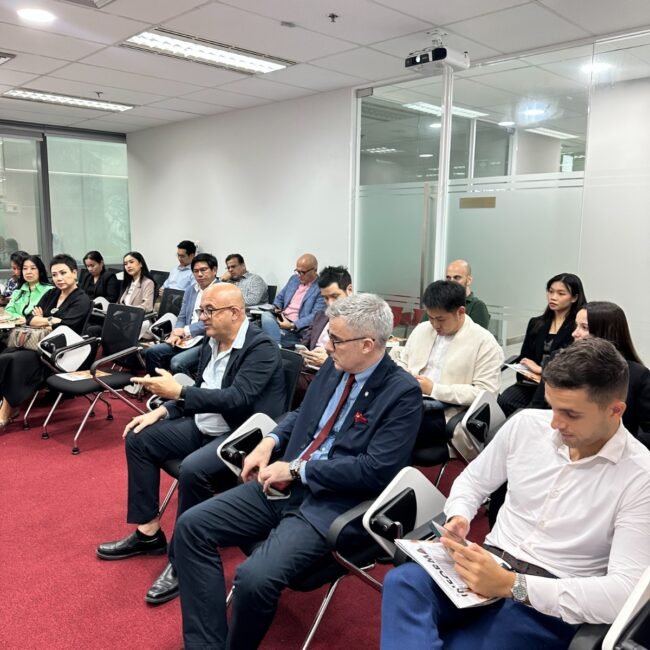
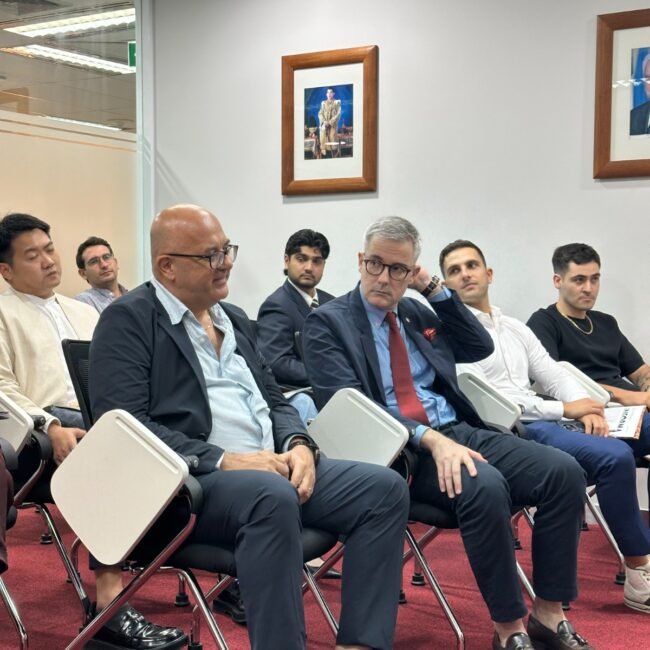
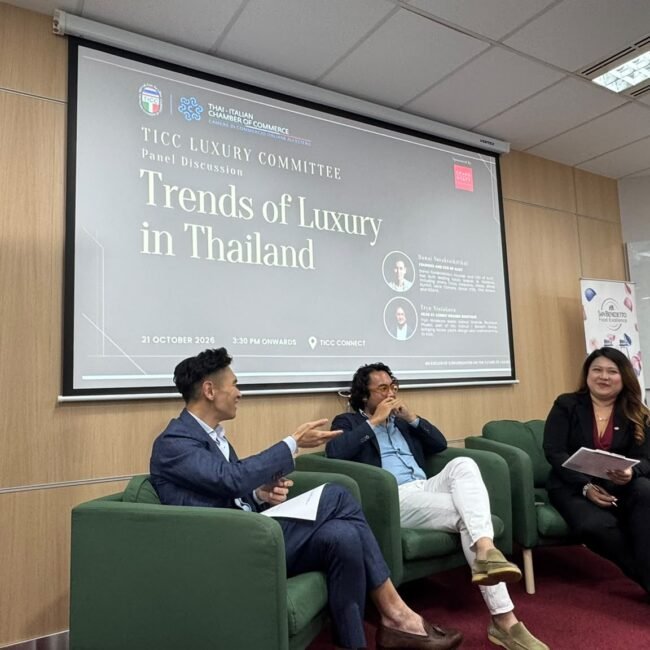
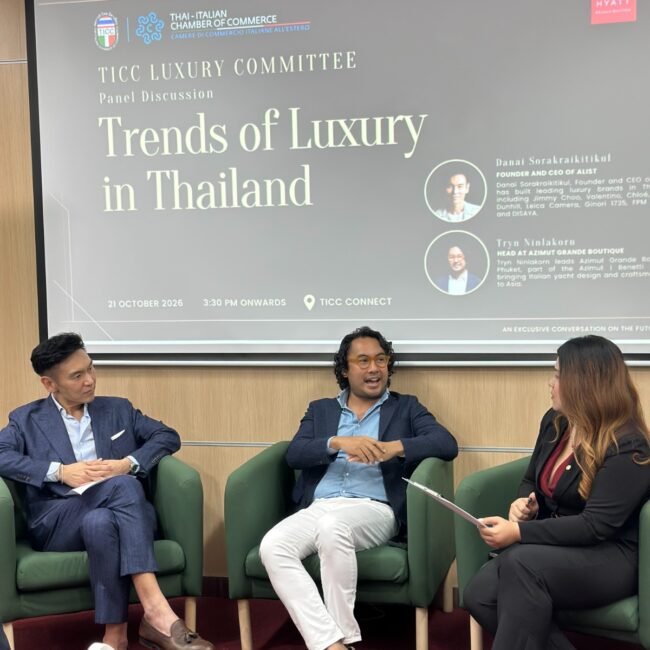
ATC Advisory attended “Trends of Luxury in Thailand”, an industry panel discussion organized by the Thai-Italian Chamber of Commerce (TICC) in Bangkok. The event brought together professionals and business leaders to explore the transformation of Thailand’s luxury sector, offering valuable perspectives on consumer behavior, retail dynamics, brand positioning, and the future of luxury distribution.
Represented by its CEO, ATC Advisory joined the discussion as part of its ongoing engagement with the local business community and its commitment to understanding the opportunities and challenges shaping the expansion of international brands across Asia-Pacific.
The event featured two distinguished speakers representing different segments of the luxury industry:
Danai Sorakraikitikul, Founder & CEO of ALIST, who shared his expertise in international luxury brand distribution, retail development, and consumer behavior in Thailand.
Tryn Ninlakorn, Head of Azimut Grande Boutique, who offered insights into the expectations, purchasing preferences, and evolving priorities of high-end consumers.
Together, their perspectives provided an opportunity to examine how Thailand’s luxury market is evolving and what international brands should consider when developing their presence in the country.
Thailand’s Luxury Market: An Evolving Landscape
Thailand has established itself as an important luxury retail destination in Southeast Asia, supported by its international tourism industry, sophisticated retail infrastructure, and established consumer base for premium and luxury products.
Bangkok, in particular, plays a central role in the country’s luxury ecosystem, attracting international fashion houses, premium lifestyle brands, and specialized retailers seeking access to both domestic and international customers.
However, the market is becoming increasingly complex.
Luxury consumers are exposed to global trends, international brands, digital platforms, and increasingly sophisticated retail experiences. As a result, purchasing decisions are shaped not only by product quality and brand recognition but also by the overall experience, values, and identity associated with a brand.
These changes are creating opportunities for international companies while simultaneously raising the importance of a well-defined and locally informed market entry strategy.
For European brands, particularly those seeking to establish their presence in Thailand for the first time, understanding these dynamics is essential to developing a competitive and sustainable position.
Authenticity, Craftsmanship, and Brand Identity: The New Priorities of Luxury Consumers
One of the central themes emerging from the discussion was the growing importance of authenticity, craftsmanship, brand identity, and customer experience in the luxury sector.
While established brand recognition continues to play a significant role, consumers increasingly evaluate luxury products through a broader set of considerations, including their heritage, perceived exclusivity, distinctive design, and the quality of the experience surrounding the purchase.
This evolution is particularly relevant for European brands, many of which possess strong traditions of craftsmanship, manufacturing excellence, and distinctive creative identities.
For these companies, international expansion should not rely exclusively on the appeal of European origin or premium product positioning. Communicating a compelling brand story, maintaining consistency across distribution channels, and delivering an appropriate customer experience are equally important.
The growing relevance of these elements also highlights the need for international brands to carefully evaluate how their positioning can be translated into the local market without compromising their identity.
Beyond Traditional Distribution: Rethinking Market Entry Strategies
Another particularly relevant topic was the evolving role of distribution within Thailand’s luxury industry.
Traditional distribution models are facing new challenges as retail environments, consumer purchasing habits, and brand expectations continue to change.
For international companies, identifying a local distributor remains an important component of market entry. However, appointing a distributor alone does not guarantee successful market penetration or sustainable commercial development.
An effective strategy requires a broader understanding of the market, including the positioning of potential commercial partners, their retail networks, customer profiles, operational capabilities, and ability to communicate the brand’s values.
Distribution decisions can have long-term consequences for brand perception, pricing consistency, market accessibility, and future growth opportunities.
For this reason, international brands must approach partner selection as a strategic decision rather than a purely transactional process.
Depending on the product category, brand positioning, and commercial objectives, market entry may involve different approaches, ranging from exclusive distribution agreements and partnerships with established retailers to selective retail placements, digital commerce, or dedicated brand development initiatives.
Understanding which model best fits a particular brand requires both local market intelligence and access to qualified commercial networks.
The Importance of Local Market Knowledge
The insights shared during the event reinforced a fundamental consideration for international expansion: success in Asian markets requires a detailed understanding of local commercial ecosystems.
Although Thailand offers opportunities for European luxury and premium brands, its market dynamics cannot simply be equated with those of Europe or other Asian countries.
Consumer expectations, retail structures, negotiation practices, distribution relationships, and competitive environments vary considerably between markets.
Companies entering Thailand must therefore balance their global brand positioning with an informed understanding of local conditions.
This is particularly important for businesses looking to build long-term commercial relationships, establish controlled distribution networks, and protect their brand identity throughout the expansion process.
Engaging with local industry stakeholders, understanding the priorities of distributors and retailers, and continuously monitoring changes in consumer behavior are essential steps toward developing an effective regional strategy.
Strengthening Connections Within Thailand’s Business Community
ATC Advisory extends its appreciation to the Thai-Italian Chamber of Commerce (TICC) for organizing the event and facilitating an informative discussion on the future of Thailand’s luxury industry.
Special thanks also go to Danai Sorakraikitikul and Tryn Ninlakorn for sharing their experience and perspectives on the opportunities and challenges shaping the market.
As the luxury industry continues to evolve, dialogue between international brands, local industry leaders, and business organizations will remain essential to understanding market developments and identifying new opportunities for cooperation.

Collaborator of the SE Asia IP SME Helpdesk (European Commission)
.
Member and Technical Partner of Thai-Italian Chamber of Commerce
Member of Thai-Italian Chamber of Commerce